
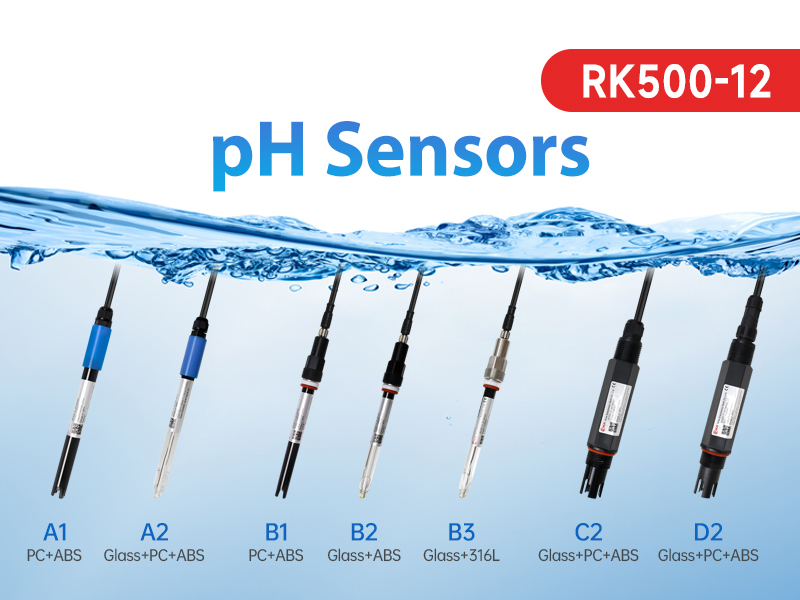
Modern pH sensors are essential tools in laboratories, industrial processes, environmental monitoring, and water treatment systems. They measure the hydrogen ion concentration in a solution, providing critical information about acidity or alkalinity. While the measurement itself is vital, understanding the various signal output options is equally important, as it determines how the data is transmitted, processed, and integrated into monitoring or control systems.
A pH sensor works by converting the chemical properties of a solution into an electrical signal. This signal can then be read by meters, controllers, data loggers, or automated systems. The type of signal output affects not only accuracy and speed but also compatibility with other equipment. Choosing the right output format ensures that the sensor meets the specific requirements of an application, whether it is laboratory analysis, industrial automation, or environmental monitoring.
A pH sensor typically offers multiple signal output options, including analog, digital, and wireless communication. Analog outputs, such as millivolt (mV) or 4–20 mA current loops, provide continuous real-time readings that are widely used in industrial processes and automated control systems. These signals are simple to integrate with programmable logic controllers (PLCs) and distributed control systems (DCS), allowing precise monitoring and process adjustments.
Analog Signal Outputs
Analog outputs remain common due to their simplicity and reliability. The most prevalent types include:
- Millivolt Output: Direct voltage proportional to pH value; requires amplification and signal conditioning.
- Current Loop (4–20 mA): Ideal for long-distance signal transmission in industrial environments, minimizing interference.
- Voltage Output (0–5 V or 0–10 V): Compatible with many data acquisition systems and controllers.
Analog signals are continuous and easy to interpret, making them suitable for applications requiring steady monitoring and control.
Digital Signal Outputs
Digital outputs are becoming increasingly popular for modern pH sensors. They transmit data in a digital format, which reduces noise interference and allows direct integration with computers, programmable devices, and cloud platforms. Common digital communication protocols include:
- RS-232 / RS-485: Reliable for short and long-distance connections, often used in industrial and laboratory settings.
- Modbus: Supports multiple sensors in a networked system, allowing centralized monitoring and control.
- I2C / SPI: Common in compact or embedded systems for high-speed data transfer.
Digital outputs improve accuracy, enable advanced data processing, and simplify integration into automated systems and remote monitoring networks.
Wireless and Smart Communication
Emerging pH sensor technologies include wireless signal outputs, enabling real-time monitoring without physical wiring. Wireless communication options such as Wi-Fi, Bluetooth, or proprietary RF protocols allow sensors to transmit data to central systems, cloud-based platforms, or mobile devices. These options are particularly useful for environmental monitoring, field research, and smart water management systems, where sensors need to operate in remote or difficult-to-access locations.
Factors to Consider When Choosing an Output Option
Selecting the appropriate signal output depends on several factors:
- Distance to the Control System: Analog current loops are preferable for long-distance transmission.
- Environmental Conditions: Digital and wireless outputs can reduce interference in harsh environments.
- Integration Requirements: Consider compatibility with PLCs, data loggers, SCADA systems, or cloud platforms.
- Accuracy and Response Time: Digital and amplified analog outputs may offer higher precision for critical applications.
- Future Upgrades: Wireless or networked outputs provide flexibility for scaling and automation.
Conclusion
Understanding the signal output options in modern pH sensors is essential for achieving accurate, reliable, and efficient monitoring and control. Whether using analog, digital, or wireless outputs, selecting the right format ensures compatibility with equipment, reduces errors, and supports real-time decision-making. Properly chosen signal outputs enhance the versatility of pH sensors, enabling their use across laboratories, industrial processes, water treatment, and environmental monitoring, while preparing systems for future automation and digital integration.