Power presses are indispensable machines in modern manufacturing, widely used for shaping, cutting, and forming metal components. Among the most common types are mechanical and hydraulic power presses, each with distinct operating principles, advantages, and applications. Understanding the differences between these two types is crucial for manufacturers seeking to optimize production efficiency, precision, and safety.
A Power Press is a machine designed to apply controlled force to a workpiece, typically through a punch and die system. You can explore a variety of industrial-grade models at Power Press. Both mechanical and hydraulic presses serve similar purposes, but they achieve force generation and control in fundamentally different ways. These differences impact everything from production speed to energy efficiency, making the right choice critical for any manufacturing operation.
Operating Mechanism
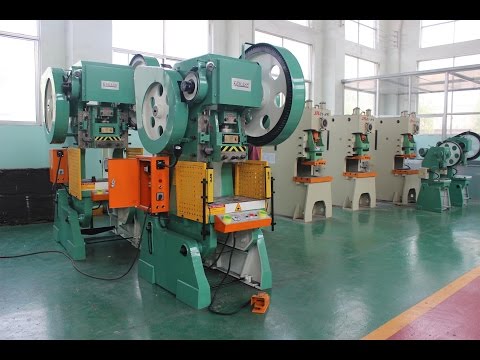
The primary difference between mechanical and hydraulic presses lies in their operating mechanisms. Mechanical presses use a motor-driven flywheel connected to a crankshaft or eccentric system. The rotary motion of the flywheel is converted into linear motion of the ram, which then exerts force on the workpiece. This setup allows for rapid strokes, making mechanical presses ideal for high-speed, repetitive operations such as blanking, punching, and forming small to medium-sized components.
Hydraulic presses, on the other hand, use hydraulic cylinders filled with pressurized fluid to generate force. The operator controls the fluid pressure, which drives the ram downwards in a smooth, controlled motion. Hydraulic presses offer superior flexibility in terms of stroke length and force control, allowing them to perform operations like deep drawing, bending, and forging where consistent force is critical throughout the stroke.
Force Control and Precision
Mechanical presses excel in speed but have limitations in force control. Once the stroke begins, the force applied to the workpiece is largely determined by the flywheel and crank mechanism. This makes mechanical presses highly efficient for high-volume production, but less suitable for applications requiring gradual or variable force. Excessive force in sensitive operations can lead to material deformation or tool damage.
Hydraulic presses provide precise control over both the amount of force and the speed of application. Operators can adjust the ram speed, dwell time, and pressure to match the specific requirements of the workpiece and tooling. This makes hydraulic presses particularly useful for complex forming operations and materials that require careful handling, such as aluminum or stainless steel.
Speed and Production Volume
Mechanical power presses are unmatched in terms of speed and throughput. They can complete hundreds of strokes per minute, making them ideal for mass production environments. The trade-off, however, is reduced flexibility. Mechanical presses are generally limited to fixed stroke lengths and require significant time to adjust dies for different operations.
Hydraulic presses operate at slower speeds, often completing only a few strokes per minute compared to their mechanical counterparts. However, the slower operation is offset by versatility. The ability to adjust stroke length and force makes hydraulic presses suitable for low-volume, specialized, or high-precision production where quality is prioritized over speed.
Maintenance and Durability
Mechanical presses rely heavily on moving parts such as gears, bearings, and crankshafts. These components experience significant wear over time, requiring regular maintenance and lubrication. Mechanical presses are generally durable and capable of handling repetitive high-speed operations, but unexpected breakdowns can be costly and disruptive to production.
Hydraulic presses have fewer mechanical components subject to wear, but their hydraulic systems—pumps, valves, and seals—require careful maintenance to prevent leaks and pressure loss. Hydraulic presses typically have longer service lives for tooling due to smoother operation and less impact stress, but maintenance of hydraulic fluid quality and system integrity is essential for optimal performance.
Applications
Mechanical presses are best suited for high-speed operations such as stamping, punching, and blanking in automotive, appliance, and electronics industries. Their efficiency and reliability make them ideal for producing large volumes of identical components.
Hydraulic presses are favored for applications requiring precision and controlled force, such as deep drawing, forging, bending, and embossing. Industries that handle delicate materials or require intricate shaping often rely on hydraulic presses for superior quality and flexibility.
Conclusion
Choosing between a mechanical and hydraulic power press depends on the specific requirements of the manufacturing process. Mechanical presses offer speed and high-volume productivity, while hydraulic presses provide precision, flexibility, and controlled force. By understanding these differences, manufacturers can make informed decisions that optimize production efficiency, product quality, and operational safety. Each type of power press has its place in modern industry, and selecting the right machine is essential for achieving the desired balance between speed, precision, and versatility.