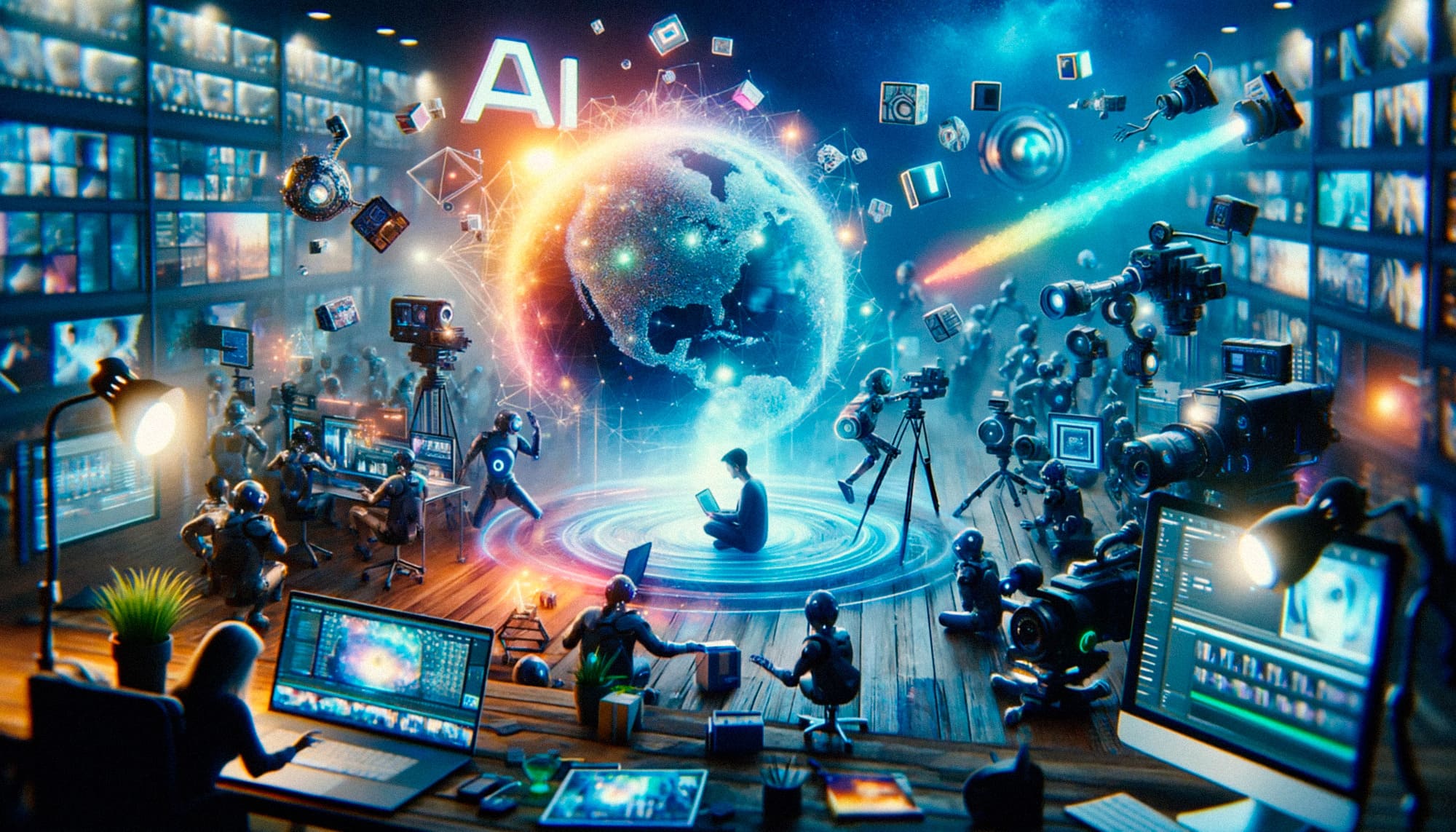
The rise of artificial intelligence has brought significant innovation to video production, enabling creators to transform ideas into visual content without relying on traditional filming or editing processes. One of the most impactful developments in this space is the emergence of AI video generators, which convert text prompts into high-quality videos. These tools are redefining the way content is produced for marketing, education, entertainment, and social media.
AI video generators operate by combining multiple AI technologies, including natural language processing (NLP), computer vision, and generative models. The process begins with understanding the user’s input—typically a text prompt that describes the desired video content. The AI interprets the narrative, identifies key elements, and maps out a sequence of visuals, movements, and transitions that reflect the user’s instructions. This seamless integration of text and visual generation allows for rapid video creation with minimal manual effort.
Many content creators are exploring AI Video Generator platforms to streamline their production workflows. These platforms allow users to input scripts or prompts and receive video outputs complete with scenes, animations, and audio elements. The AI automatically determines how to arrange scenes, choose visual styles, and synchronize voiceovers or background music, effectively translating textual ideas into dynamic audiovisual experiences. This capability is particularly valuable for individuals and businesses seeking to produce professional-quality videos quickly and efficiently.
The Role of Natural Language Processing
Natural language processing is a core component of AI video generation. NLP allows the AI to understand context, grammar, and semantics within the input text. By analyzing the script or prompt, the AI determines key visual elements, timing, and scene transitions. For example, if the text describes a beach at sunset, NLP algorithms help the AI generate a corresponding scene with appropriate lighting, colors, and movement.
NLP also enables personalization and adaptability. Users can include specific stylistic instructions, keywords, or narrative cues that the AI interprets to produce customized content. This ensures that videos are not only technically accurate but also align with the intended tone, style, and messaging.
Generative Models and Visual Synthesis
Once the AI understands the input text, generative models take over to produce the actual visual content. These models, often based on techniques like Generative Adversarial Networks (GANs) or diffusion models, create images and sequences frame by frame. GANs involve two networks: one generates frames, and the other evaluates their quality, iteratively refining visuals until they meet a high standard of realism or stylistic coherence.
For video production, diffusion models are particularly useful. They gradually transform random noise into structured visuals, producing smooth, high-resolution frames that can be stitched together into continuous sequences. These techniques allow AI video generators to create diverse content ranging from realistic scenes and animations to abstract or stylized visuals suitable for marketing campaigns or creative projects.
Audio and Motion Integration
AI video generators often incorporate additional layers for audio and motion. Speech synthesis technologies allow the AI to generate natural-sounding voiceovers based on text prompts. Background music, sound effects, and ambient audio can be automatically added, synchronized to match scene timing and mood. Motion algorithms ensure that objects, characters, or environmental elements move naturally across frames, enhancing realism and engagement.
By combining visual, audio, and motion synthesis, AI video generators produce cohesive, professional-quality videos without the need for manual editing or recording. Users can focus on providing creative direction, while the AI handles technical production details.
Applications Across Industries
The applications of AI video generators are vast. In marketing, brands can quickly produce promotional videos, social media content, and advertisements. Educational institutions use these tools to create explainer videos, tutorials, and interactive lessons efficiently. Content creators on platforms like YouTube and TikTok can experiment with visual storytelling and rapid content production without extensive equipment or resources.
Corporate teams also benefit from AI video generators for training videos, presentations, and internal communications. The ability to generate multiple video variations from a single script allows organizations to test messaging, tailor content for different audiences, and maintain consistent branding.
Limitations and Best Practices
While AI video generators offer impressive capabilities, they are not without limitations. Generated videos may occasionally include visual artifacts, timing inconsistencies, or less nuanced storytelling compared to human-edited content. Users should review and refine outputs to ensure quality and coherence.
Ethical considerations are also essential. AI-generated videos should respect copyright laws, avoid misrepresentation, and be transparent about AI involvement, particularly in educational or professional contexts. Responsible usage ensures both compliance and audience trust.
Conclusion
AI video generators are transforming content creation by converting text into dynamic, high-quality video with minimal manual intervention. Platforms like AI Video Generator integrate natural language processing, generative models, and audio-motion synthesis to produce visuals efficiently and creatively. By understanding how these technologies work and applying best practices, creators, marketers, and organizations can harness AI to streamline workflows, enhance engagement, and expand the possibilities of video production in an increasingly digital world.