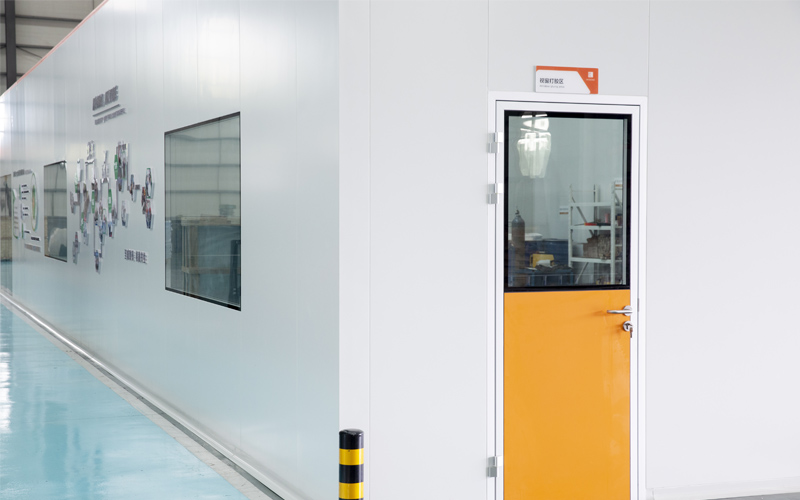
Cleanrooms are controlled environments designed to limit airborne particles, microorganisms, and other contaminants. They are essential in industries such as pharmaceuticals, biotechnology, medical devices, and electronics manufacturing. Cleanrooms are classified based on ISO 14644-1 standards, which define allowable particle concentrations per cubic meter of air. Two commonly referenced classes are ISO 8 and ISO 7, each with different levels of cleanliness and operational requirements. Understanding the differences between these classes is essential for organizations planning cleanroom facilities or determining the appropriate environment for specific processes.
An ISO 8 cleanroom is a controlled environment that maintains a moderate level of cleanliness, suitable for processes where high levels of sterility are not required. While ISO 8 allows for more particles compared to stricter cleanrooms, it still ensures a controlled environment to reduce contamination risks. For a detailed understanding of ISO cleanroom standards, operational practices, and design considerations, resources such as the ISO 8 Cleanroom provide comprehensive guidance for industry professionals and facility planners.
Particle Concentration Limits
The primary difference between ISO 8 and ISO 7 cleanrooms is the allowable particle concentration. An ISO 8 cleanroom permits a maximum of 3,520,000 particles per cubic meter for particles 0.5 micrometers or larger. In comparison, an ISO 7 cleanroom allows up to 352,000 particles of the same size, representing a tenfold decrease in permissible contamination levels.
Smaller particles, such as those measuring 0.1 micrometers, are also strictly monitored, with ISO 7 having much stricter limits than ISO 8. This difference in particle tolerance affects the design of airflow systems, filtration requirements, and monitoring frequency in cleanrooms. ISO 7 cleanrooms are designed to provide a higher level of protection for sensitive processes, while ISO 8 cleanrooms offer adequate control for applications where moderate cleanliness is sufficient.
Airflow and Filtration Requirements
Airflow design and filtration are critical to maintaining cleanroom standards. ISO 7 cleanrooms typically use a combination of laminar and turbulent airflow to remove contaminants efficiently, with higher air change rates compared to ISO 8. Ceiling-mounted HEPA filters are standard in ISO 7, ensuring uniform distribution of clean air across the room. Airflow velocities are carefully calculated to minimize turbulence, which can reintroduce particles into critical areas.
In contrast, ISO 8 cleanrooms may utilize turbulent or partially unidirectional airflow, with lower air change rates and less stringent filtration coverage. While HEPA filters are still used, the system requirements are less complex, reducing installation and operational costs. These differences directly impact the ability of the cleanroom to maintain lower particle concentrations and meet regulatory requirements for sensitive processes.
Environmental Control Differences
Both ISO 7 and ISO 8 cleanrooms regulate temperature, humidity, and pressure to support process stability and minimize contamination. ISO 7 cleanrooms require tighter environmental control, with smaller allowable deviations in temperature and humidity, as even minor fluctuations can impact critical processes. Positive pressure relative to adjacent areas is strictly maintained to prevent the ingress of contaminated air.
ISO 8 cleanrooms, while still maintaining controlled environmental conditions, have wider tolerances for temperature and humidity fluctuations. This makes ISO 8 cleanrooms easier and less expensive to operate, while still providing a sufficiently clean environment for non-critical manufacturing or assembly processes.
Personnel and Operational Protocols
Human activity is a major source of contamination in any cleanroom. ISO 7 cleanrooms enforce strict gowning procedures, including full coveralls, gloves, masks, and shoe covers made from non-shedding materials. Personnel movements, access points, and material handling protocols are carefully managed to reduce particle generation. Airlocks, gowning rooms, and controlled entry points are standard features.
ISO 8 cleanrooms have less restrictive personnel requirements. Gowning may be simplified, and entry and exit protocols are less stringent due to the higher permissible particle levels. However, controlled procedures are still necessary to maintain cleanliness and prevent contamination of sensitive equipment or products.
Applications of ISO 7 vs. ISO 8 Cleanrooms
ISO 7 cleanrooms are suitable for processes requiring high cleanliness, such as sterile pharmaceutical production, medical device assembly, and certain electronics manufacturing tasks. These cleanrooms provide a level of contamination control that protects sensitive products from particle-related defects and ensures compliance with strict regulatory standards.
ISO 8 cleanrooms are appropriate for applications that require moderate cleanliness, such as non-sterile pharmaceutical production, laboratory research, bulk material handling, and assembly of components less sensitive to contamination. ISO 8 provides a balance between operational cost and environmental control, making it suitable for processes where extreme cleanliness is not critical.
Cost and Design Considerations
The stricter requirements of ISO 7 cleanrooms result in higher construction and operational costs. Advanced filtration systems, higher air change rates, and precise environmental controls contribute to increased expenses. In contrast, ISO 8 cleanrooms are more cost-effective to build and operate due to reduced filtration requirements, lower airflow specifications, and simpler environmental control systems. Organizations often select ISO 8 cleanrooms when budget constraints exist, and ultra-clean conditions are not required.
Conclusion
The main differences between ISO 8 and ISO 7 cleanrooms involve particle concentration limits, airflow and filtration requirements, environmental controls, personnel protocols, and associated costs. ISO 7 cleanrooms offer stricter contamination control for critical processes, while ISO 8 cleanrooms provide moderate cleanliness at a lower cost. Understanding these distinctions helps organizations choose the appropriate cleanroom classification based on process requirements, regulatory compliance, and budget considerations, ensuring effective contamination control and operational efficiency.